

How Marvel Turned Its Superheroes Into Collateral
The company behind the biggest movie franchise ever spent decades treating its characters less like art and more like assets to pawn.
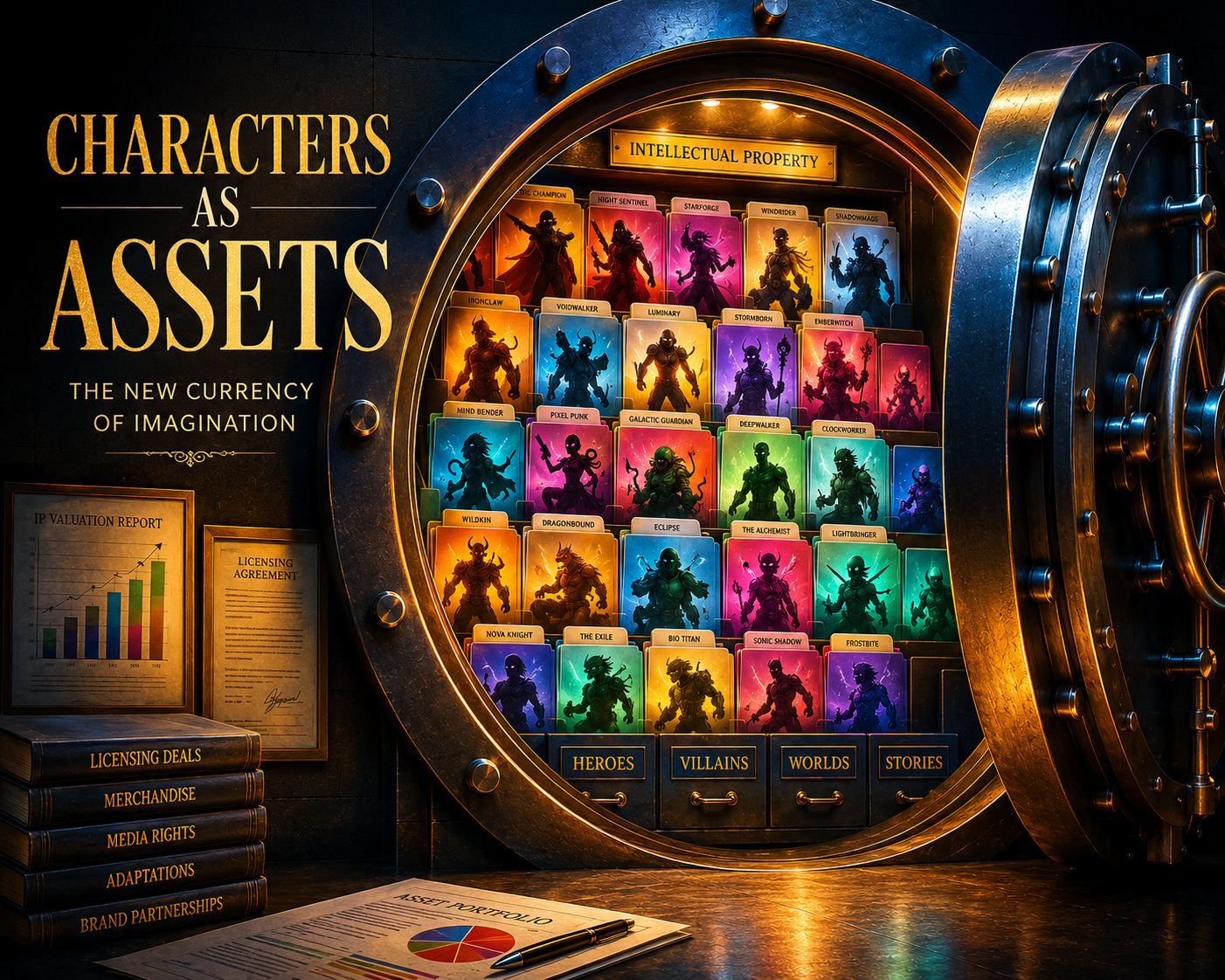
In 2005, Marvel executives signed a loan agreement and handed a bank a list of ten characters as collateral: Captain America, Thor, Ant-Man, Black Panther, Doctor Strange, and five more. If the movies Marvel planned to make with them lost money, the lender could take the heroes.
The striking thing about that list is who was missing from it. No Spider-Man. No X-Men. No Hulk. Marvel had already handed the film rights to its most bankable names to other studios years earlier, back when it needed cash badly enough to take almost any offer.
Marvel's climb from bankrupt comics publisher to the most successful movie studio in history usually gets told as a creative triumph. It is at least as much a financial one. For decades, Marvel stayed alive by treating its superheroes not as characters but as collateral.
The Christmas the Comics Company Went Broke
On December 27, 1996, the Marvel group of companies filed for Chapter 11 bankruptcy protection with well over half a billion dollars in debt.
The collapse had two engines. One was a burst bubble. In the early 1990s, comic books had become a speculative market, with buyers snapping up multiple copies of "collector" issues expecting them to appreciate like stock. When that belief cracked, sales cratered and the distribution system fell apart with it. The other engine was the balance sheet. The financier who controlled Marvel had layered the company with debt from acquisitions, so when revenue dropped there was no slack to absorb it.
Marvel's stock had traded around 35 dollars in 1993. By the bankruptcy filing it was worth a couple of dollars. A company sitting on some of the most recognizable characters in the world was, on paper, nearly worthless.
A Fire Sale of Heroes
Cash had to come from somewhere, and the fastest source was the film rights nobody at Marvel was using anyway.
Through the mid-1990s Marvel licensed those rights out at a pace that looks reckless in hindsight. Twentieth Century Fox picked up the X-Men, the Fantastic Four, and Daredevil. Universal took the Hulk. The rights to Spider-Man bounced between studios for years before landing at Sony. These were not lucrative deals. They were mostly modest flat fees plus a thin slice of any future box office, signed by a company that could not afford to wait for a better one.
The most telling moment came in 1998. According to accounts from executives involved, Marvel offered Sony the film rights to nearly every character it owned, Iron Man and Thor and Black Panther included, for about 25 million dollars. A Sony executive reportedly waved it off, saying nobody cared about the other characters, and told his team to go back and do a deal for Spider-Man alone. Sony did, for a fee later reported in the single-digit millions plus a small cut of the gross.
That instinct, to squeeze near-term money out of a character and let someone else worry about building it, is the same one that keeps merchandise selling for decades after the movie that spawned it leaves theaters. A recognizable name is an asset that keeps paying out, and a company under pressure will always be tempted to cash part of it in early.
Did You Know?
The first genuinely successful film built from a Marvel character was not Spider-Man or an X-Man. It was "Blade," a 1998 vampire-hunter movie based on a minor comics character, made by New Line Cinema. It is widely credited with proving that Marvel properties could carry a hit film, two years before "X-Men" made the case at a larger scale.
Rescued by a Toy Company
Marvel did not so much recover from bankruptcy as get absorbed.
The company that pulled it out was Toy Biz, a manufacturer that made Marvel action figures and was run by Isaac Perlmutter and Avi Arad. In 1998 the two firms merged, and the combined business took the name Marvel Enterprises. A toy executive known for extreme frugality was now in charge of the comics company, which tells you something about which side of the operation was actually generating money.
Mortgaging the Leftovers
By 2005 Marvel wanted a bigger share of its own movies, not just a licensing check, so it built a studio the way a startup builds anything: with borrowed money and a lot of risk.
The arrangement, put together with Merrill Lynch, gave Marvel a credit facility of roughly 525 million dollars to produce its own films, with Paramount handling distribution. As security, Marvel pledged the film rights to ten of its characters. None of them were the stars it had already licensed away. The list was the bench: Captain America, Thor, Ant-Man, Black Panther, Doctor Strange, Hawkeye, Nick Fury, and a few more.
The first film out of the new studio was "Iron Man" in 2008, a character whose rights Marvel had only just clawed back from another studio and who was not even on the original collateral list. It worked, and the math every studio runs before greenlighting a film suddenly pointed in Marvel's favor for a whole roster of second-tier names.
Interesting Fact: In 2003, a United States trade court ruled that Marvel's action figures were "toys" rather than "dolls" for import purposes, roughly halving the tariff on them. The reason: dolls represent humans, toys can represent nonhuman creatures, and Marvel's own lawyers argued in court that the X-Men and their peers are not human beings. A company whose comics are built around mutants demanding to be recognized as people told a federal court its mutants were not people, to save on a customs duty.
The Four Billion Dollar Exit
In 2009, Disney bought Marvel Entertainment for about 4 billion dollars, folding roughly 5,000 characters into its library.
Since then the pieces have slowly come home, but slowly is the word, and the bill for the fire sale kept arriving for a decade.
Living With the Fire Sale
When "The Avengers" became one of the highest-grossing films ever in 2012, Marvel still could not put the X-Men or Spider-Man in it. Those characters were earning money for other studios, under contracts signed when Marvel had no leverage.
Getting even partial access back was expensive and awkward. Spider-Man returned to Marvel's films in 2015 only through an unusual truce in which Sony keeps ownership, final creative say, and the financing, while Marvel's team co-produces. It is a workaround, not a reversal.
The internal cost showed up too. In 2015, Marvel Studios chief Kevin Feige engineered a reorganization that moved his division out from under the parent company's cost-focused leadership and its "creative committee," reporting instead directly to Disney's film studio. The split freed the movies from years of budget friction.
The X-Men and the Fantastic Four did not come back until 2019, and only because Disney paid about 71 billion dollars for most of 21st Century Fox. A bundle of rights that Marvel had let go for a few million dollars in the 1990s cost its new owner a slice of a 71 billion dollar acquisition to reassemble.
The comics division, the original business, now accounts for only a small fraction of what the Marvel name earns.
Knowlegic Perspective
There is a version of the Marvel story that is purely about taste: the right editors, the right directors, a shared universe that audiences fell for. That version is real, but it skips the part where none of it was possible until the company solved a money problem first. Every creative decision from 2008 onward sat on top of a financing structure that treated Wolverine and Captain America as entries on a schedule of assets.
This is how intellectual property tends to work once it becomes valuable enough. A character stops being only a story and becomes a thing that can be licensed, mortgaged, taxed, reclassified, and sold, often several of those at once. The people who made the modern Marvel were not just storytellers. They were also, and maybe first, people who understood that a superhero is a balance-sheet item that happens to wear a cape.
Marvel's rise from bankrupt publisher to the most successful movie studio ever is usually told as a creative triumph. It is at least as much a financial one, built by a company that survived for decades by treating its superheroes as collateral, and only later got to treat them as characters again.
Sources & References
- How Marvel Bounced Back From Bankruptcy to Become Hollywood's Biggest Brand, TheWrap (2021)
- Disney to Acquire Marvel Entertainment, The Walt Disney Company (2009)
- Toy Biz, Inc. v. United States, U.S. Court of International Trade (2003)
- Marvel Comics, Encyclopaedia Britannica (2024)
- Spider-Man: Sony, Marvel Join Forces, Variety (2015)
Enjoyed this?
Get notified when a new Knowlegic story worth knowing is published.


