

Luxury Is a Bigger, Cheaper Business Than It Looks
Most famous luxury houses answer to three companies, sell you a lipstick to fund the handbag, and make the bag for a fraction of the sticker price.
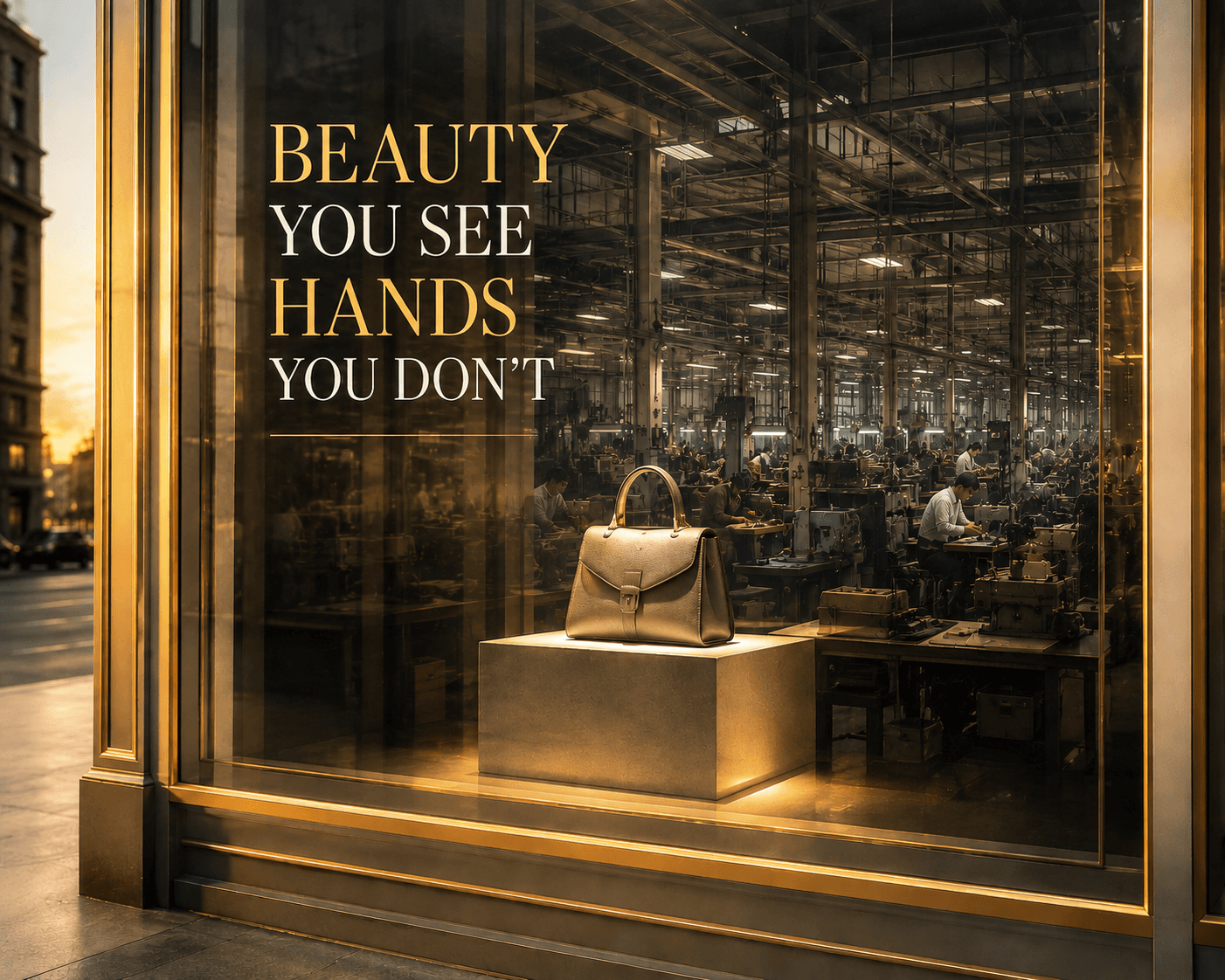
Line up the boutiques on a wealthy shopping street: a fashion house, a jeweler, a watchmaker, a champagne label, a leather-goods name. Five different logos, five different stories about heritage and craft.
In most cases, three companies own the bulk of them. LVMH, Kering, and Richemont between them control dozens of the names that the word "luxury" brings to mind, and the man who runs LVMH has spent recent years near the top of the list of the richest people alive.
The industry sells exclusivity, rarity, and the idea of a single artisan at a bench. The reality is closer to a very large consumer-goods business that has learned to make ordinary economics feel like a private club.
Luxury is a bigger, and cheaper, operation than it looks.
Three Companies, Most of the Names You Know
The modern luxury business runs through a small number of European conglomerates.
LVMH is the largest by a wide margin. It reported revenue of about 81 billion euros in 2025 and houses roughly 75 brands across fashion, leather goods, wine and spirits, watches, jewelry, perfume, and retail. Kering holds Gucci, Saint Laurent, Bottega Veneta, and Balenciaga. Richemont owns most of the prestige watch and jewelry names, Cartier and Van Cleef & Arpels among them.
A handful of houses have deliberately stayed independent, including Hermes, Chanel, Rolex, and Patek Philippe. They are the exceptions that get pointed to precisely because they are exceptions.
The pattern matters because a conglomerate runs a brand differently than a family does. It sets group-wide margin targets, shares suppliers and factories across labels, and expands each name into as many product categories as the logo can plausibly carry. The story stays artisanal. The management is spreadsheet-driven.
What You Are Actually Paying For
Luxury brands do not publish what their products cost to make, but outside estimates converge on a striking range: for a high-end handbag, direct materials and labor often come to somewhere between a tenth and a quarter of the retail price. Analysts frequently describe designer goods as priced at roughly ten to twelve times their production cost.
For once, a hard number surfaced. When Milan prosecutors examined the supply chain behind some Dior handbags in 2024, court documents put the amount paid to the subcontractor that assembled one bag at about 53 euros, for an item that retails in the thousands.
None of this means the markup is a swindle. It means the price is mostly not about the object. It is about the brand, the store, the scarcity, and the feeling, which is the same mechanism that lets certain goods keep charging far more than their materials would suggest year after year. The leather is real. The 90 percent is a story you are agreeing to pay for.
Did You Know?
A product can be labeled "Made in Italy" even when much of the work happens elsewhere, as long as the last substantial stage of production takes place in Italy. In the 2024 investigations, Milan prosecutors found luxury bags being assembled in Chinese-owned workshops on the outskirts of the city, then finished and sold under the heritage-Italian label.
The Ateliers and the Workshops
In 2024, Italian prosecutors placed subsidiaries of both Dior and Armani under court administration after raids on their subcontractors.
Investigators described workshops where employees, often undocumented migrants, worked far longer hours than were officially declared, for wages reported in one court order at two to three euros an hour, in unsafe conditions. Dior's parent company, LVMH, later agreed to fund a five-year, 2 million euro program to identify and support victims of labor exploitation. In 2025, another LVMH brand, the cashmere maker Loro Piana, was put under similar court supervision.
The gap here is not really about cost. It is about the distance between the marketing, a single skilled hand shaping a seam, and a supply chain that behaves like any other globalized manufacturing operation, with the same incentives to push work down to whoever will do it cheapest.
The Lipstick Pays for the Handbag
Most people who own something from a luxury brand never bought the expensive thing.
They bought the perfume, the lipstick, the keychain, the cardholder, the sunglasses. This is the aspirational tier, and it is the financial engine of the whole industry. A fragrance is within reach of far more consumers than a luxury handbag, and that volume, sold at generous margins, is what funds the runway shows, the flagship stores, and the celebrity campaigns.
Those glossy, unaffordable centerpieces are, in effect, advertising for the affordable products. The couture gown exists to keep the brand aura high so the entry-level buyer feels they are touching something rare. It works because the same instinct that makes people keep buying things they do not need responds strongly to the promise of borrowed status, even in small doses. The luxury you cannot afford exists mainly to sell you the luxury you can.
Keeping the Aura Scarce
Because the price depends on the story, brands work hard to protect it, sometimes destructively.
In 2018, Burberry disclosed in its annual report that it had destroyed almost 29 million pounds of unsold clothing, accessories, and perfume in a single year, rather than discount them and risk cheapening the label. It stopped the practice only after public backlash, and it was not the only brand doing it. The European Union has since banned large companies from destroying unsold clothing and footwear, with the rule taking effect in mid-2026.
Scarcity gets manufactured on the way in, too. Hermes was sued in California in 2024 by shoppers who alleged the company would only sell its hardest-to-get bags to customers who had first spent enough on scarves, shoes, and jewelry. A federal judge dismissed the case in September 2025, finding the shoppers had not shown the practice harmed competition, and the plaintiffs have taken it to appeal. What the lawsuit never really disputed was the sales culture itself:
that you must prove yourself worthy of the privilege of buying.
Knowlegic Perspective
It would be easy to read all of this as an exposure, as if finding the factory behind the boutique proves the whole thing is fake. That is not quite the lesson. Plenty of luxury goods are genuinely well made, and paying extra for design, durability, or simply for something you find beautiful is a normal thing to do.
The more useful shift is to see the industry clearly: as a consolidated, professionally managed business that sells feeling at scale, and that spends enormous effort keeping the feeling intact. The heritage, the scarcity, the artisan at the bench are real marketing assets, maintained as carefully as any factory. Once you know the volume product is the point and the showpiece is the ad, the pricing stops being mysterious and starts being legible.
Luxury is a bigger, and cheaper, operation than it looks.
Strip away the heritage and the hush, and what is left is a large, well-run business selling a feeling.
The value you are buying is mostly the story, and that is worth knowing before you decide how much of it you want.
Sources & References
- LVMH 2025 annual results, LVMH (2026)
- Dior to pay $2.3 million to help victims of labor exploitation after investigation in Italy, CNN Business (2025)
- Italy watchdog investigates Armani, Dior after worker exploitation probes, Al Jazeera (2024)
- What would a luxury handbag cost without the markup?, CBS News (2024)
- Burberry and other luxury labels are destroying millions of dollars' worth of stock, CNBC (2018)
Enjoyed this?
Get notified when a new Knowlegic story worth knowing is published.


