

Why Physical Bookstores Didn't Die Like Everyone Predicted
Amazon won on price and convenience. So why are people still walking into bookstores?
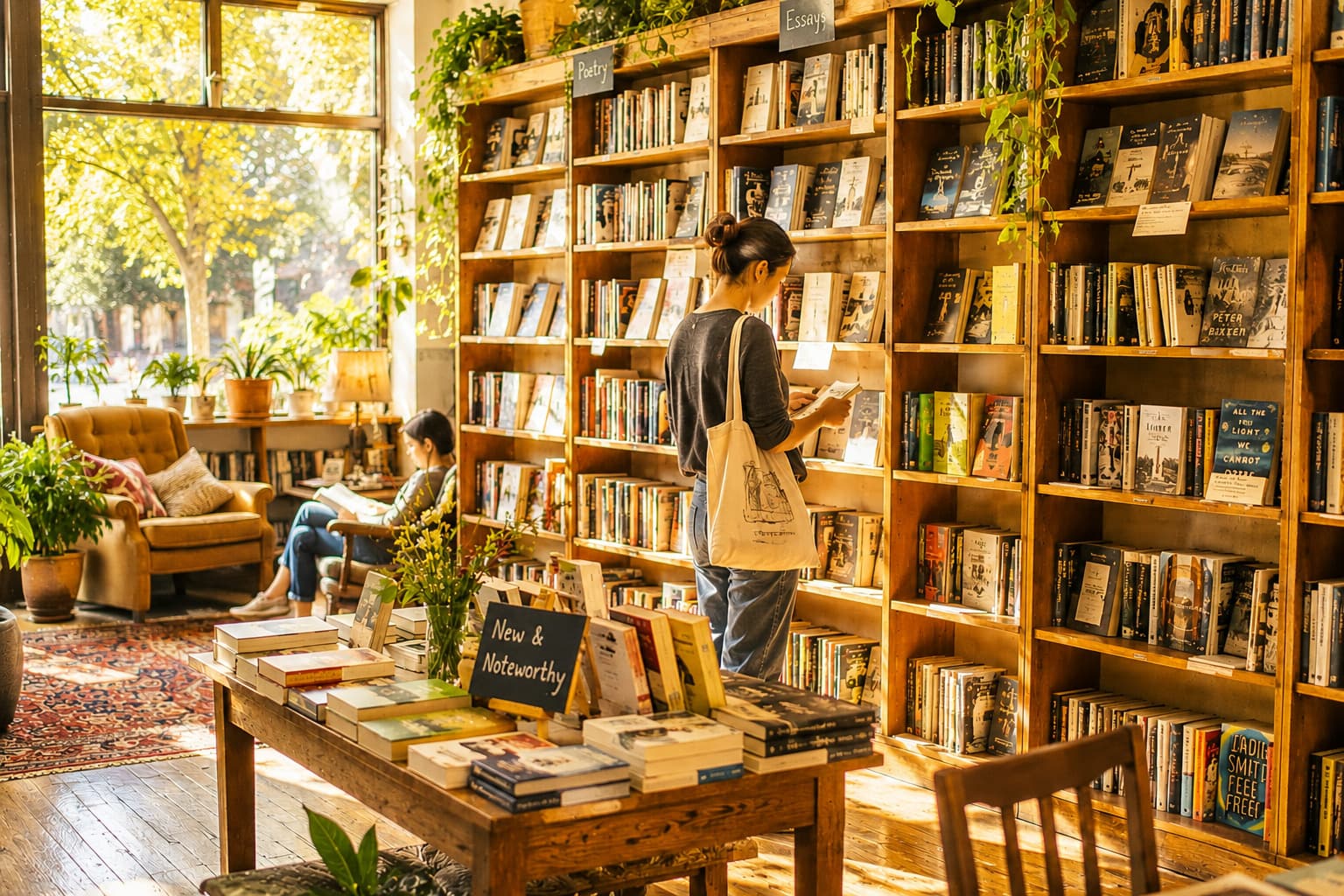
In 2011, Borders shut down all of its more than 1,200 American stores. At the time, it looked like the final chapter for physical bookstores.
But the story didn't end there.
Independent bookstore membership in the U.S. has climbed from a low of 1,651 stores in 2009 to roughly 3,400 today. Print books have actually increased their share of book sales since 2012. And Barnes & Noble, once expected to disappear alongside Borders, is opening around 60 new stores a year.
So what happened?
Amazon didn't lose the convenience battle. Bookstores simply discovered they were playing a different game.
The Funeral That Was Supposed to Be Permanent
In February 2011, Borders filed for bankruptcy.
By September, every one of its stores was gone.
The conclusion seemed obvious: Amazon had won. Physical bookstores were simply too slow, too expensive, and too inconvenient to survive.
Except Borders' story wasn't really about physical stores versus the internet.
It was about a company that made some remarkably unfortunate decisions.
Borders outsourced its online business to Amazon just as e-commerce was becoming the future of retail. It locked itself into enormous long-term leases. It arrived late to e-readers and digital books.
Meanwhile, sales fell sharply through 2008, 2009, and 2010.
Borders didn't merely get beaten by Amazon.
It helped build the road Amazon used to beat it.
And that distinction matters.
Because while Borders disappeared, something unexpected began happening elsewhere.
The Numbers Nobody Expected
The American Booksellers Association counted just 1,651 independent bookstores in 2009.
By 2018, membership had risen to 2,470.
By the mid-2020s, it had climbed to roughly 3,400, nearly three times the 2009 low and the highest level recorded since the late 1990s.
This wasn't an uninterrupted boom. Independent bookstores had already suffered a major decline from their earlier peak.
But the direction changed.
And it kept changing.
Even more surprising: print books didn't disappear.
Print accounted for roughly 69% of book sales in 2012. By 2022, that share had risen to around 75%.
The technology that was supposed to replace the physical book had instead helped create a world where people became even more conscious of why they liked the physical one.
Did You Know?
Barnes & Noble had fallen to 627 stores by 2019.
Then came a rather unusual turnaround.
The company brought in James Daunt, whose background was running independent bookstores in London.
His solution wasn't to make Barnes & Noble behave more like Amazon.
It was almost the opposite.
He gave individual store managers more freedom to choose books based on their local customers.
Stores became less identical.
More local.
More curated.
And by the mid-2020s, Barnes & Noble was opening roughly 60 new stores a year.
What Amazon Couldn't Ship
Here's where the story becomes more interesting.
Harvard Business School researchers studying the independent bookstore revival identified three things that helped explain the comeback:
Community. Curation. Convening.
Amazon can offer millions of books.
It can compare prices.
It can deliver tomorrow.
But it can't quite reproduce the experience of walking into a bookstore and saying:
"I liked this. What should I read next?"
A knowledgeable bookseller might hand you something you never searched for.
A local author might be giving a reading that evening.
You might bump into someone you know.
You might walk in looking for one book and leave with something completely unexpected.
You're not just buying.
You're browsing.
You're discovering.
You're spending time somewhere.
Sociologist Ray Oldenburg called spaces like these "third places", places outside home and work where people gather and build informal communities.
A bookstore can be one of them.
A delivery warehouse can't.
The Thing People Were Actually Buying
This may be the biggest misunderstanding about physical retail.
We assume people visit a store because they need the product.
But sometimes, the product is only part of the experience.
People don't visit bookstores only to buy books.
They visit to discover something.
To wander.
To ask questions.
To attend an event.
To sit among people who like books.
To feel connected to something that isn't an algorithm.
That's also why platforms such as Bookshop.org emerged, attempting to combine the convenience of online shopping with financial support for independent bookstores.
The lesson isn't that people suddenly stopped liking convenience.
They didn't.
It's that convenience isn't the only thing people value.
The Part of the Story That's Still Fragile
This isn't a victory lap.
Physical bookstores remain under pressure from rent, inflation, staffing costs, logistics, and Amazon's enormous scale.
Print sales also dipped slightly in the first half of 2025.
So the comeback isn't guaranteed.
But perhaps that's not the most interesting part anyway.
The real discovery is that physical bookstores were never competing only on the thing Amazon was best at.
They were competing on something harder to measure.
And much harder to automate.
Knowlegic Perspective
It's tempting to describe the bookstore comeback as nostalgia winning against technology.
That's too simple.
Technology won the parts of book buying that were always about convenience.
Fast delivery.
Huge selection.
Easy comparison.
Lower friction.
But something remained.
Discovery. Community. Expertise. Serendipity.
The bookstore's real product was never simply the book.
It was the experience surrounding the book.
And that may explain something much bigger about the future of physical retail.
When technology makes buying something effortless, physical businesses don't necessarily have to become more convenient.
They can become more human.
Amazon never lost the war on price or convenience.
It just turned out that wasn't the war independent bookstores were actually fighting.
The bookstores that survived and the ones opening again figured out something Borders never did:
Sometimes people don't want a faster way to buy something.
They want a reason to go somewhere.
And sometimes, they want to walk through a door without knowing exactly what they're looking for—and discover something worth taking home.
One last thing...
If you made it all the way to the end, congratulations, you've just proved that people still finish things. Now go find a bookstore near you and discover something you weren't looking for.
Enjoyed this?
Get notified when a new Knowlegic story worth knowing is published.


