

Why Do We Get Sleepy After Lunch?
The afternoon slump is not just the food. Your body clock, last night's sleep and the size of your meal all play a part.
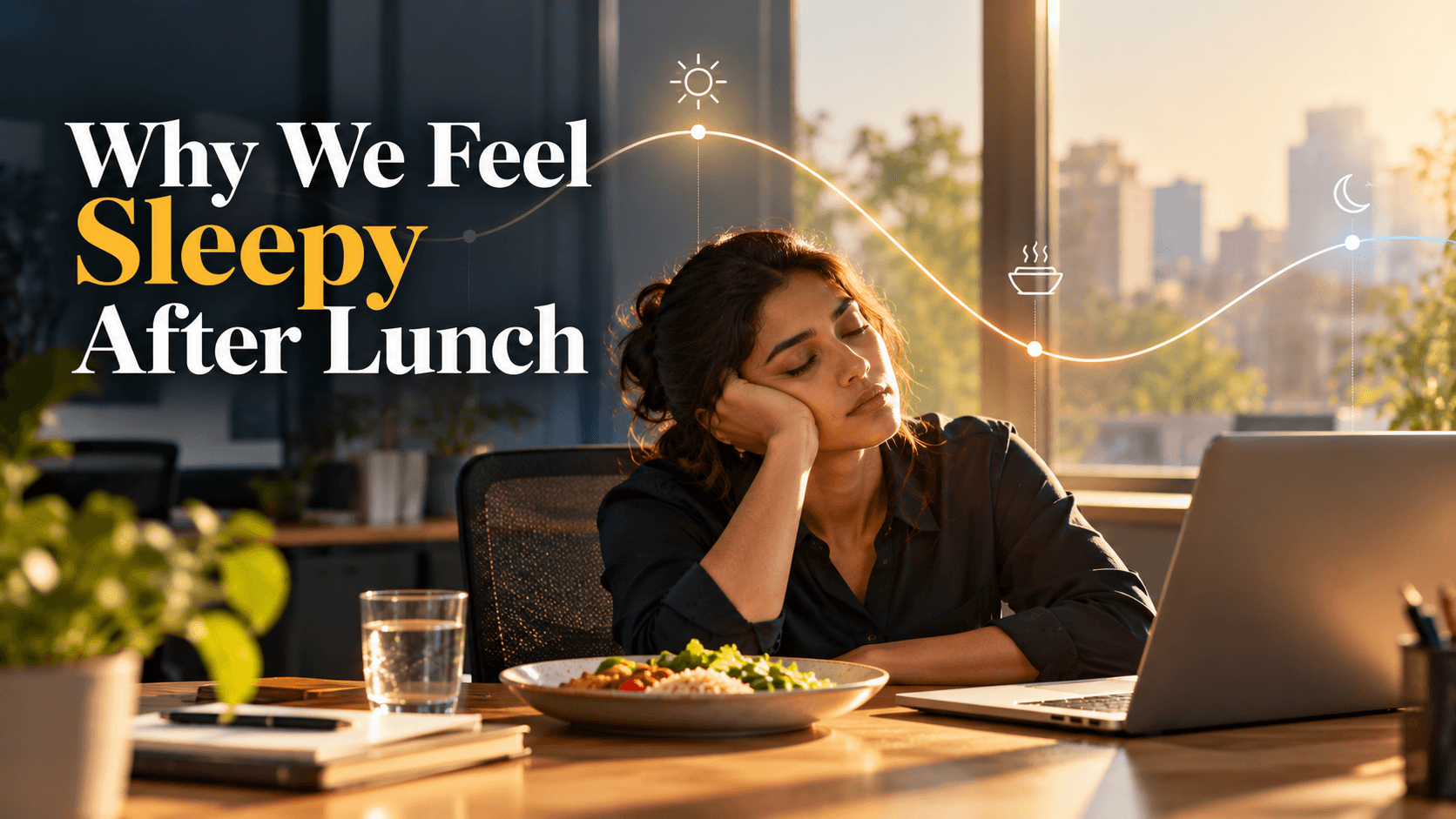
It is 2 p.m. You ate a normal lunch an hour ago, the email in front of you is not hard, and the words keep sliding away. Everyone knows why: the food pulled the blood away from your brain. Except that explanation is a myth.
What is really happening is a handover between your body clock, last night's sleep and what was on your plate. In the next few minutes you will see exactly what shifts inside you at this hour, why lunch gets the blame, and which small habits help, from daylight to a 20-minute nap.
There is one piece of the story researchers still argue about. You will meet it near the end.
Your Body Clock Has an Afternoon Dip
Your body runs on an internal clock, called the circadian rhythm. It is a roughly 24-hour cycle that helps decide when you feel alert and when you feel sleepy.
The Sleep Foundation says that "the circadian signals that promote wakefulness tend to decrease in the early afternoon." Medical News Today puts the dip between 2 p.m. and 5 p.m.
Think of a dimmer switch on a lamp. Your alert signal does not flip off. It slides down a notch in the afternoon.
A research paper that built a computer model of human sleep propensity, the tendency to fall asleep, describes a post-noon nap zone, a stretch of the afternoon when sleep propensity rises. So the afternoon rise in sleepiness is something researchers have tried to model, not just a feeling.
The Longer You Are Awake, the Harder Sleep Pulls
There is a second force at work. The Sleep Foundation explains that "the longer you've been awake, the more your desire to sleep, known as sleep drive, grows."
Picture a bucket filling with water from the moment you wake up. By mid-afternoon the bucket is fairly full, and the body clock's alert signal is dipping at the same time.
That timing is why a lunch break can feel like the moment sleep arrives. Lunch happens to be standing in the spotlight when two other things meet.
What Digestion and Blood Sugar Do
Eating does change how you feel. Medical News Today notes that after a meal, "blood sugar will also rise, which can lead to a dip in energy levels shortly afterward."
It also says that conditions such as insulin resistance may make sleepiness after eating more likely. Insulin is the hormone that helps your cells use the sugar in your blood.
Exactly why food makes people drowsy is not settled. Medical News Today says there are different theories about what causes it.
One popular idea has been busted. Some people say the body pulls blood away from the brain to digest food. The Sleep Foundation says scientific evidence has debunked this myth.
Meal Size and Meal Type Matter
Both the amount and the kind of food seem to count. According to the Sleep Foundation, "a high-carbohydrate meal is more likely to cause you to feel sleepy than a low-carbohydrate meal." Carbohydrates are foods such as bread, rice, pasta and sweets.
Size matters too. The Sleep Foundation says that "a lighter meal with fewer calories will likely lead to less sleepiness than a heavy or high-calorie meal."
Medical News Today adds that the bigger the meal, the longer the digestive system takes to absorb its nutrients.
Imagine two lunches. One is a small salad with beans and chicken. The other is a large plate of white pasta and a sweet drink. The second is the one more likely to leave you reaching for the sofa.
Did You Know?
A nap can backfire. The Sleep Foundation says that being woken from deep sleep can leave you groggy and "actually worsen sleepiness." That is why the advice is to keep naps short.
Sleep Debt Can Make It Worse
Sleep debt is the gap between the sleep you need and the sleep you actually get. If you slept badly last night, your afternoon may feel harder. For more on why the brain needs its rest, see why your brain needs a full night of sleep.
The evidence here is gentler than for the other causes. Full nights of sleep may ease tiredness in the daytime and a diet very high in fat can harm sleep at night, which can leave you more tired by day.
What Actually Helps
None of these are guaranteed cures, and what works can differ from person to person. These are the tips the sources offer.
Get daylight. Taking a walk in the sunshine.
Eat a smaller lunch. Smaller but more frequent meals help keep energy levels stable.
Try a short nap, if you can. Most adults nap for around 20 minutes, and 30 at the very most. It says experts typically recommend napping eight or more hours before bedtime.
When to Mention It to a Doctor
An afternoon slump is common. Tiredness that does not go away is a different matter.
If post-meal sleepiness regularly disrupts your daily life, or if steps to limit it don't work, talk to your doctor.
Medical News Today says people whose exhaustion is overwhelming, and does not ease after rest, should talk it over with a doctor. The NHS advises seeing a GP if you have felt tired for a few weeks without knowing the reason.
Knowlegic Perspective
It is tempting to give every body signal one clean cause. The afternoon slump resists that. It is the body clock dipping, the pull of sleep building through the day, and the meal landing right in the middle.
That matters because it changes what we try. If food were the only villain, we would just skip lunch. Since it is a mix, small things such as daylight, a lighter plate and a short rest may each help in a different way.
It also helps to treat a dip as a normal pattern of the body clock, not a personal failing. The afternoon slump is a meeting of several small forces, and lunch is just one of them.
This article is general information, not personal medical advice.
Sources & References
- Why You Get Sleepy After Eating, Sleep Foundation (2025)
- Food coma: What to know about postprandial somnolence, Medical News Today (2026)
- Napping: Benefits and Tips, Sleep Foundation (2026)
- Tiredness and fatigue, NHS (2023)
- Modeling Napping, Post-Lunch Dip, and Other Variations in Human Sleep Propensity, Sleep (2009)
Enjoyed this?
Get notified when a new Knowlegic story worth knowing is published.


