

How One Movie Forced IMAX to Reinvent Its Cameras
How Christopher Nolan's The Odyssey pushed engineering beyond its limits and quietly changed the future of filmmaking.
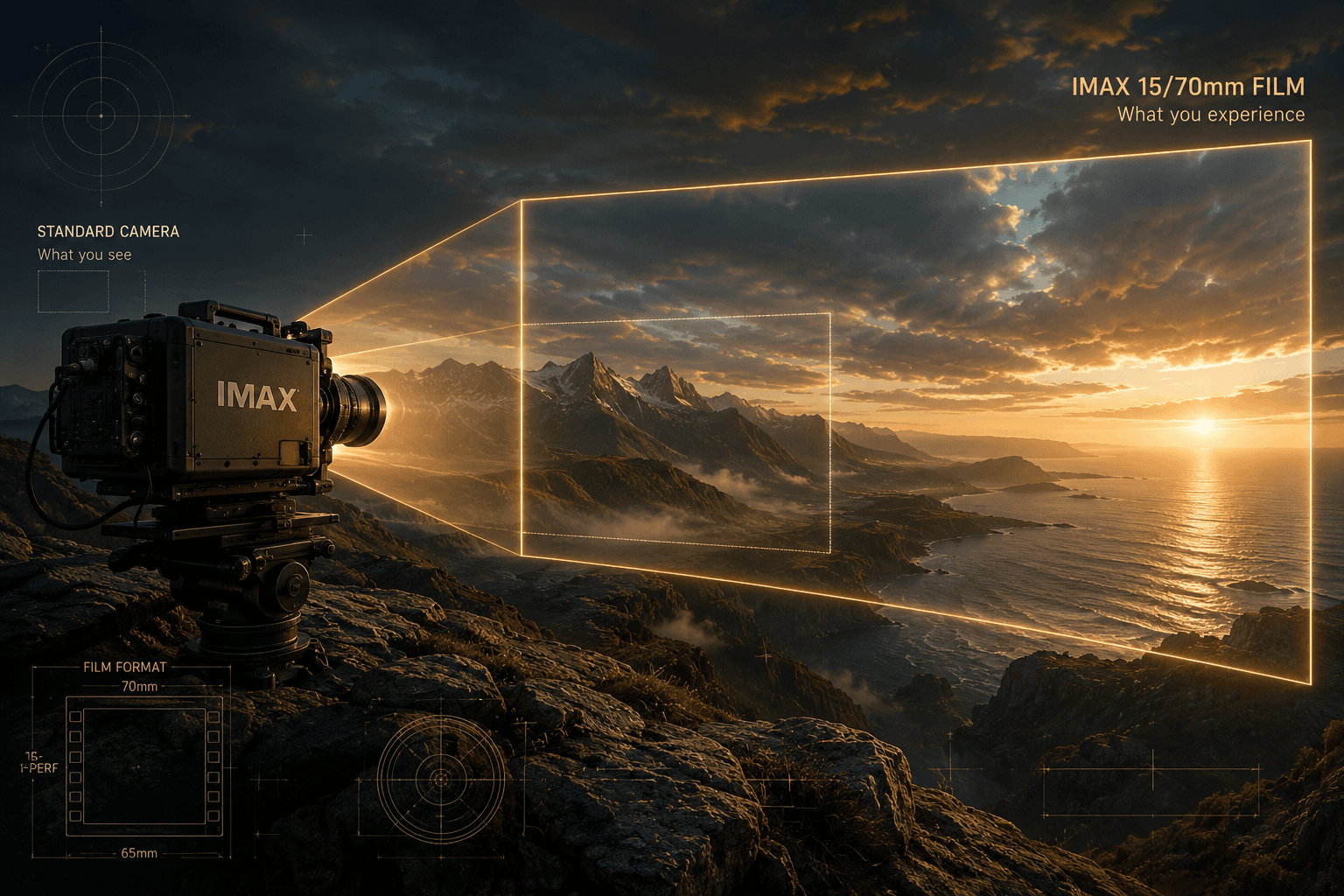
Most people will remember The Odyssey for its breathtaking visuals.
I suspect history may remember it for something else entirely.
Behind every stunning frame lies a story that never appears on screen, a story of engineers, filmmakers, and a problem that had remained unsolved for decades.
Christopher Nolan didn't simply choose to shoot his latest film on IMAX.
He challenged IMAX to build a camera that didn't exist.
That single decision quietly changed the future of filmmaking.
Every camera is a compromise
It's easy to assume that the world's most advanced movie camera can do everything.
In reality, every camera asks filmmakers to make compromises.
Some are lightweight but sacrifice image quality.
Some capture incredible detail but struggle in low light.
IMAX film cameras had their own trade-off.
They produced some of the most spectacular images ever seen in cinema, and they were notoriously large, heavy, and surprisingly loud.
The sound wasn't just an inconvenience.
It often made intimate dialogue scenes difficult to record because the camera itself generated enough mechanical noise to interfere with production sound.
That's one reason most directors used IMAX only for selected sequences like action scenes or sweeping landscapes.
The quieter conversations were usually filmed with different cameras.
Nolan asked an uncomfortable question
Instead of accepting that limitation, Christopher Nolan asked a simple question:
Why can't an entire feature film be shot in IMAX?
It sounds obvious today.
But sometimes the biggest innovations begin with questions that everyone else has stopped asking.
IMAX engineers spent years redesigning key parts of the camera system.
The goal wasn't to improve image quality. It was to reduce mechanical noise without sacrificing the enormous 65mm film format that gives IMAX its distinctive look.
When The Odyssey entered production, that goal became reality. For the first time, an entire feature film could be photographed using IMAX film cameras.
That achievement is as much an engineering breakthrough as it is a cinematic one.
Innovation rarely begins in a laboratory
One of the biggest misconceptions about innovation is that it starts with inventors.
More often, it starts with users.
A doctor asks for a better surgical tool.
A pilot requests a safer cockpit.
An athlete demands lighter equipment.
In this case, a filmmaker wanted a better camera. The engineers responded.
It's a pattern repeated throughout history.
Many breakthrough technologies exist because someone refused to accept the limitations of existing tools.
The Odyssey is simply the latest example.
Why does IMAX look so different?
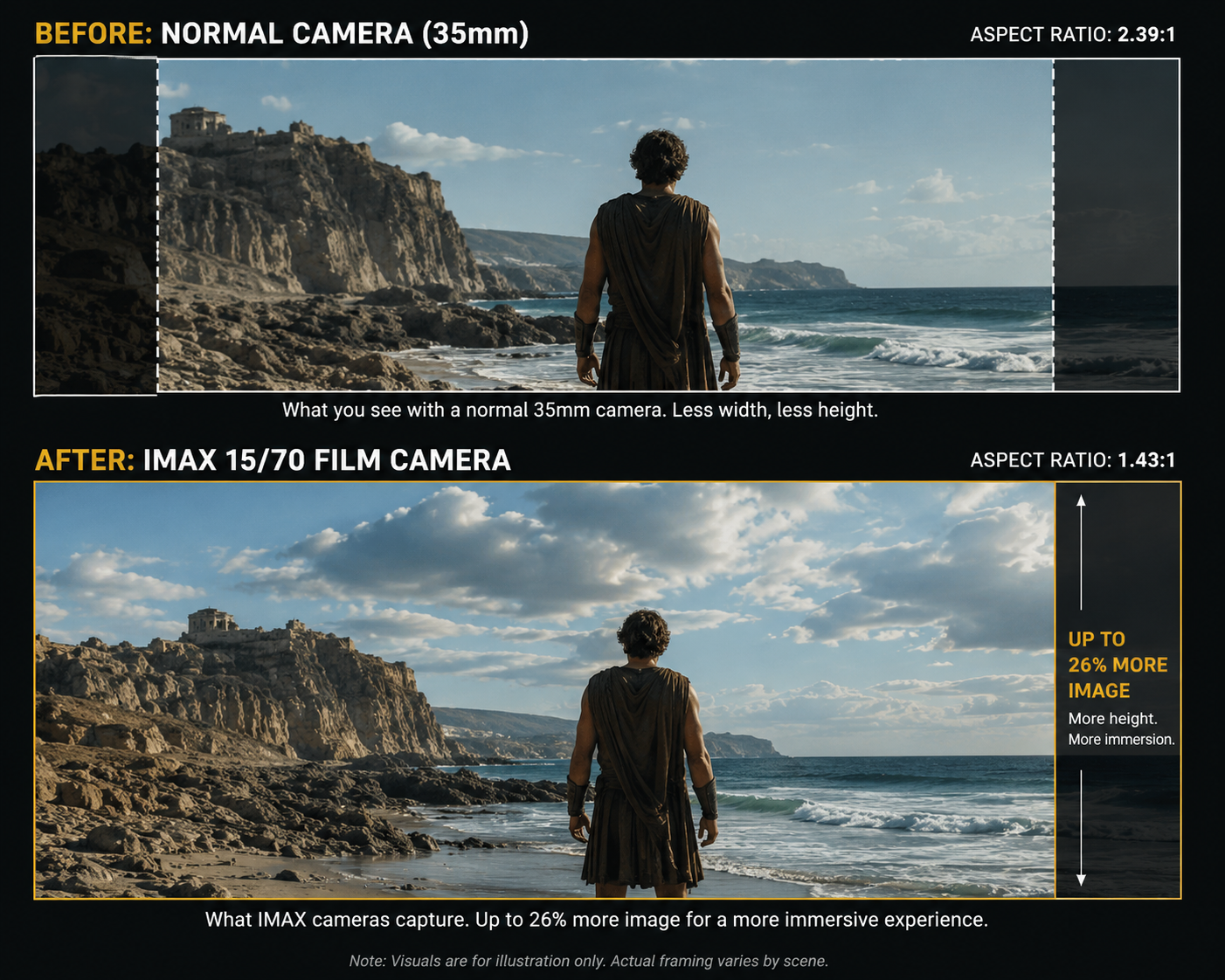 The answer isn't just "higher resolution."
IMAX film uses a much larger film frame than conventional 35mm film.
A larger frame captures more visual information, allowing exceptional detail, richer textures, and a greater sense of depth.
That's why landscapes feel enormous.
Why faces reveal tiny expressions.
Why the image often feels less like watching a screen and more like looking through a window.
The camera isn't making objects bigger.
It's preserving more of reality.
Bigger isn't always better
Interestingly, IMAX cameras remain some of the most challenging cameras to work with.
They're heavier.
They're more expensive.
Film stock itself is costly.
Every minute of footage demands careful planning.
Unlike digital filmmaking, where directors can record endlessly, shooting on film encourages precision.
Every take matters.
In a world obsessed with speed, IMAX filmmaking rewards patience.
A breakthrough most audiences will never notice
Here's the irony.
Millions of viewers will watch The Odyssey without ever knowing that a new generation of IMAX cameras made it possible.
And that's perfectly fine.
The best technology often becomes invisible.
We don't admire airplanes because of their engines.
We admire them because they fly.
Similarly, audiences won't praise quieter camera mechanisms.
They'll simply say,
"The movie looked incredible."
Behind that reaction lies years of engineering that most of us will never see.
The bigger lesson
The story of The Odyssey isn't really about cameras.
It's about what happens when creativity pushes technology beyond its limits.
Great innovators don't always invent new tools.
Sometimes they challenge existing tools to become better.
That's exactly what happened here.
A filmmaker wanted to tell a story without compromise.
Engineers found a way to make it happen.
The result isn't just another blockbuster.
It's a reminder that progress often begins with one person asking,
"What if we didn't accept the limitation?"
Technology and storytelling have always evolved together. Better printing presses changed literature. Better cameras transformed photography. Better computing reshaped animation.
Now, The Odyssey adds another chapter to that story. It shows that innovation doesn't always arrive as a revolutionary invention. Sometimes, it begins with a simple question: Can we do this better?
And when enough talented people refuse to accept "no" as the final answer, the tools and the industries that depend on them move forward.
Enjoyed this?
Get notified when a new Knowlegic story worth knowing is published.


