

Why the Music From Your Teenage Years Never Really Leaves You
The neuroscience behind why a song from age 17 can undo decades in three seconds.
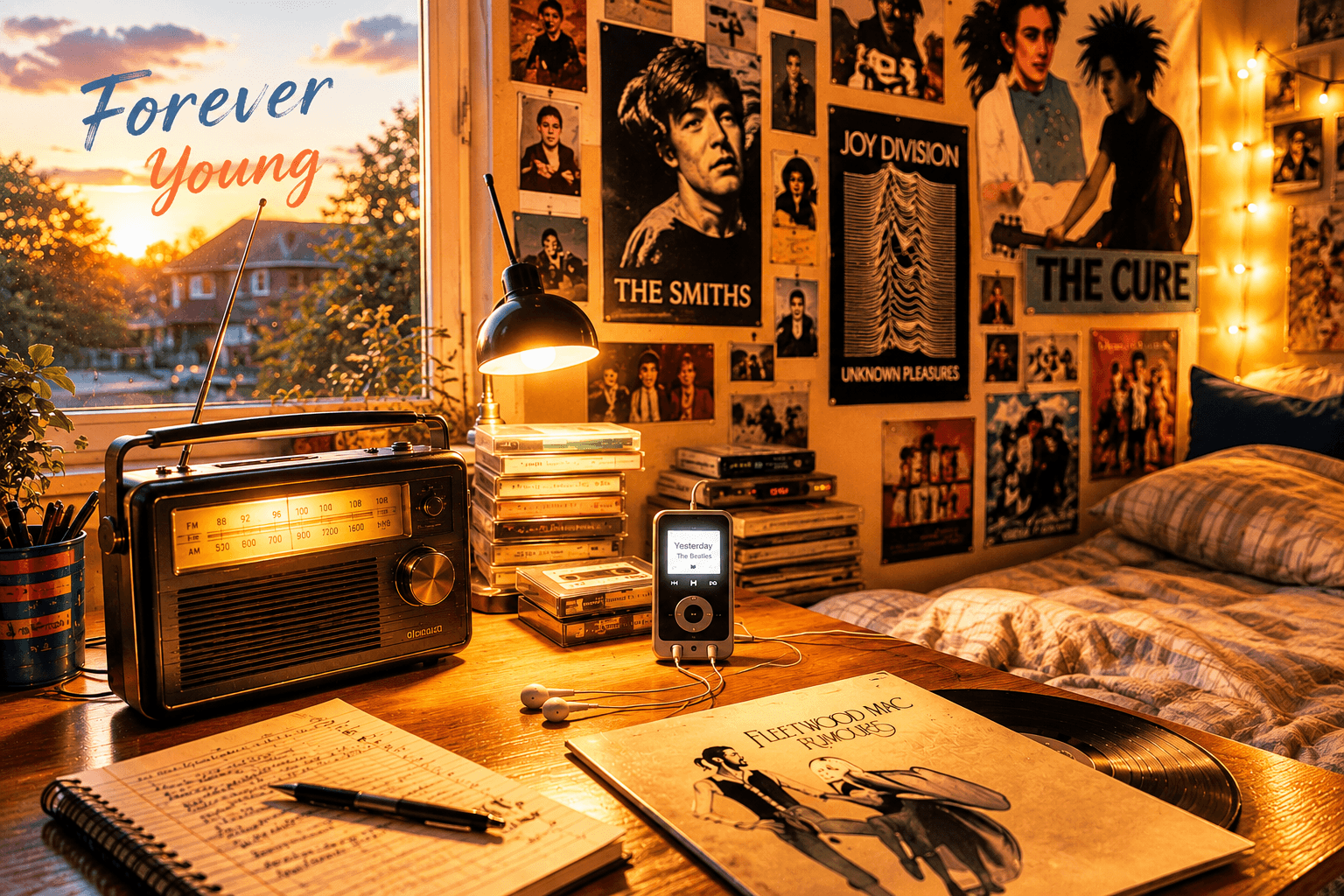
A global study of nearly 2,000 people across 84 countries found something remarkably consistent: the music that people remember as most personally meaningful was often released when they were around 17 years old.
Psychologists call this the reminiscence bump.
And it isn't simply nostalgia playing tricks on you.
Adolescence is a period when the brain is developing rapidly, social identity is taking shape, and emotional experiences can become deeply encoded in memory.
Music happens to be there for all of it.
That's why a three-minute song can sometimes transport you decades into the past in just a few seconds.
The Age Nobody Agreed to, But Everyone Shares
Ask a room full of strangers to name the song that means the most to them, and you'd expect completely different answers.
Different countries.
Different cultures.
Different decades.
Different genres.
Yet researchers keep finding a pattern.
A 2025 study from the University of Jyväskylä in Finland asked nearly 2,000 people from 84 countries to identify the piece of music that felt most personally meaningful to them.
When researchers compared those songs with each listener's age at the time they encountered them, the pattern peaked at around 17.
Earlier research had already identified a broader version of the effect. Adults asked to recall music-triggered memories tend to point toward songs from their teenage years and early twenties, with the strongest concentration often falling between ages 10 and 19.
Psychologists call this the reminiscence bump.
It appears in autobiographical memory generally not just music.
But music seems to produce one of its clearest versions.
A Brain That's Still Under Construction
Here's where the neuroscience becomes interesting.
During adolescence, the brain is still developing, particularly in regions involved in planning, decision-making, emotional regulation, and the development of a more stable sense of self.
At the same time, the brain's reward and emotional systems are highly responsive.
Think of the teenage brain as a house still being renovated.
The wiring isn't finished.
Experiences that happen while that wiring is being established can become deeply integrated into the structure.
For many people, music is part of that process.
The songs playing during those years become attached to new experiences, relationships, emotions, places, and discoveries.
Eventually, the song becomes more than a song.
It becomes part of the architecture of memory.
Why the Song, Not Just the Memory?
There's another piece to the puzzle.
Adolescence is also when many people begin developing an identity that feels increasingly separate from their parents.
Friends become more important.
Social groups become more meaningful.
People begin asking bigger questions:
Who am I?
Where do I belong?
Who do I want to become?
Music becomes part of that process.
It's playing during first heartbreaks, first serious friendships, late-night conversations, parties, arguments, road trips, and moments of independence.
The song isn't simply attached to the memory.
It's tangled into the identity being formed around that memory.
That's one reason a song from your teenage years can feel strangely personal even decades later.
Why the Effect Fades
The reminiscence bump doesn't mean new music stops mattering once you grow up.
It doesn't.
A song you discover at 35 can still become deeply meaningful.
But adulthood generally brings a more established sense of identity and a different pattern of life experiences.
New music is now being added to an existing structure.
The teenage years are different.
You're still building the structure itself.
That's why researchers describe adolescence as such an important period for autobiographical memory and identity formation.
The songs aren't just decorating the house. They're helping build it.
Did You Know?
One cross-sectional study found that men and women showed slightly different patterns in their musical reminiscence bump.
Men's peak appeared around 16, while women's appeared somewhat later, after 19.
The finding comes from a single study and isn't a settled rule, but it adds another interesting possibility: the timing of major identity-forming experiences may vary between individuals and groups.
The 2025 Jyväskylä study found the same broad age pattern across all 84 countries included in the research.
The songs changed dramatically from country to country.
The languages changed.
The musical cultures changed.
But the age at which personally meaningful music tended to cluster remained remarkably similar.
The soundtrack changes. The developmental window doesn't seem to change nearly as much.
The Reminiscence Bump
One of the simplest ways to visualize the phenomenon is as a curve.
Music-related memories become increasingly powerful through childhood and adolescence, reach their strongest concentration around the late teenage years, and then gradually decline across adulthood.
The exact peak isn't identical for everyone.
But the overall pattern is remarkably consistent.
And that helps explain something we've all experienced:
You can hear hundreds of songs throughout your life.
Yet a handful from your teenage years can still feel almost impossibly vivid.
Knowlegic Perspective
It's tempting to treat this as a fun explanation for why your parents still listen to the same twenty songs.
But the reminiscence bump points to something much bigger.
Identity isn't assembled evenly across a lifetime.
There appears to be a period when memories, emotions, relationships, independence, and cultural experiences become particularly important in defining the person you're becoming.
Music happens to be present throughout that process.
That may also explain why adolescence is such valuable territory for the entertainment industry.
Streaming platforms, films, television, and advertising all compete for the attention of young audiences partly because the cultural experiences people encounter during these years can remain emotionally significant for decades.
The song you discover at 17 may not simply remind you of who you were.
It may have helped shape who you became.
That song playing in the grocery store didn't just remind you of being seventeen.
For a few seconds, it reopened a part of your autobiographical memory that had been built around that music decades earlier.
Your brain wasn't simply listening to the song back then.
It was connecting the song to people, places, emotions, and a version of yourself that was still taking shape.
And some of that construction stayed with you.
That's why three minutes of music can sometimes feel like a time machine.
Enjoyed this?
Get notified when a new Knowlegic story worth knowing is published.


