

The Psychology of Habit Formation: Why Most Habits Fail
Learn why lasting habits depend on systems, not willpower.
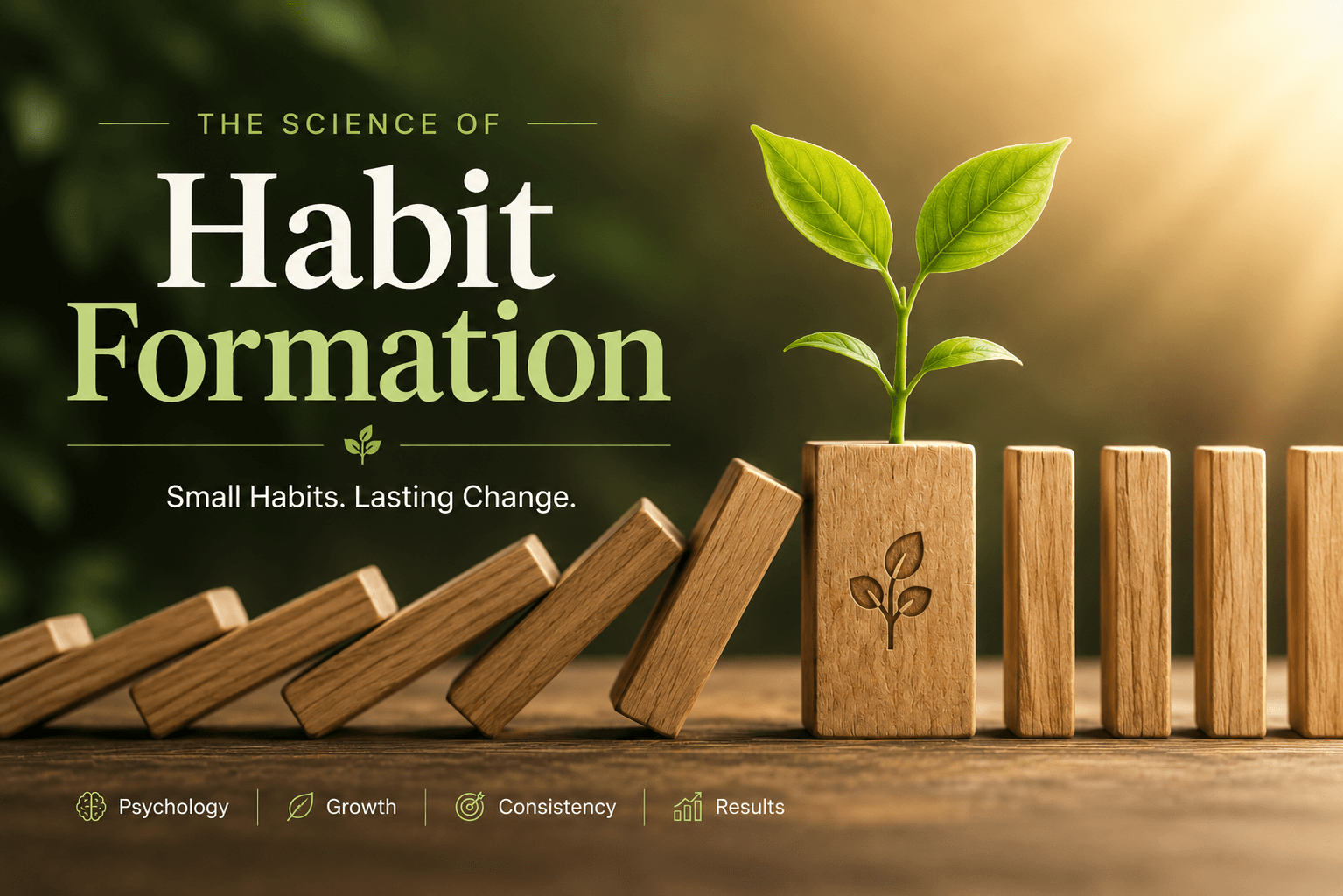
Lasting habits are built through systems, not motivation alone. This article explores the psychology of habit formation, the neuroscience behind automatic behaviors, and five practical strategies that can help you replace short-lived motivation with sustainable daily routines.
Why Most Habits Fail
Every January, millions of people promise themselves they'll exercise, eat healthier, or read more. By February, many have stopped. The problem is rarely motivation, it is usually poor habit design. Successful habits reduce the need for willpower by using consistent cues, supportive environments, and immediate rewards.
How Habits Form in the Brain
New behaviors require conscious decisions. With repetition, they become increasingly automatic as the brain shifts processing toward systems involved in procedural learning. Eventually, a familiar cue can trigger the behavior with minimal conscious effort.
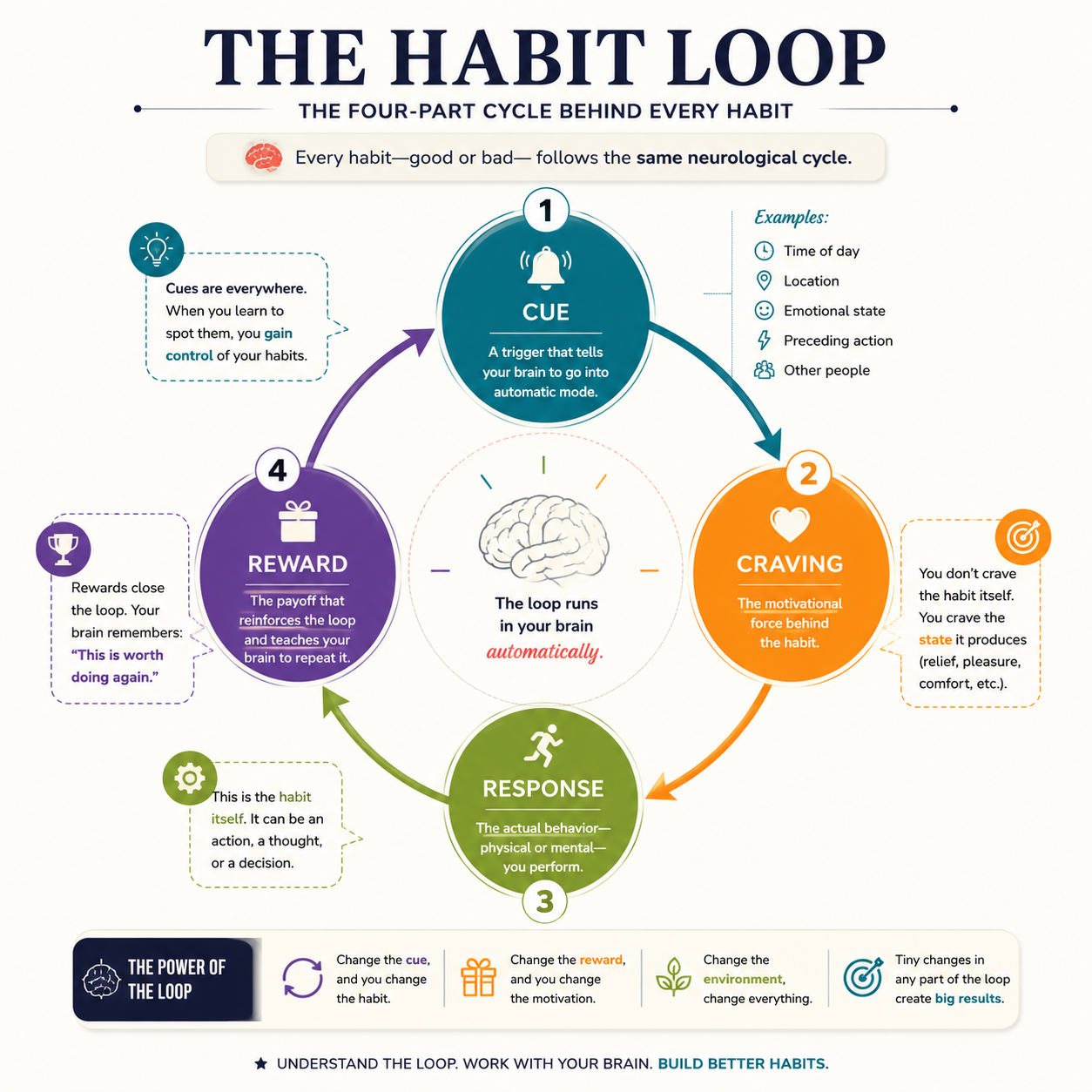 The Habit Loop
Imagine your phone vibrates. You become curious, unlock it, read the message, and feel satisfied. That simple sequence illustrates the habit loop.
Why Willpower Isn't Enough
Habits that depend on daily motivation are fragile. Habits anchored to cues and environments are far more reliable, especially during stress or busy periods.
The 21-Day Myth
Myth: Habits take 21 days.
Reality: Research indicates an average of about 66 days, with wide variation depending on the person and behavior.
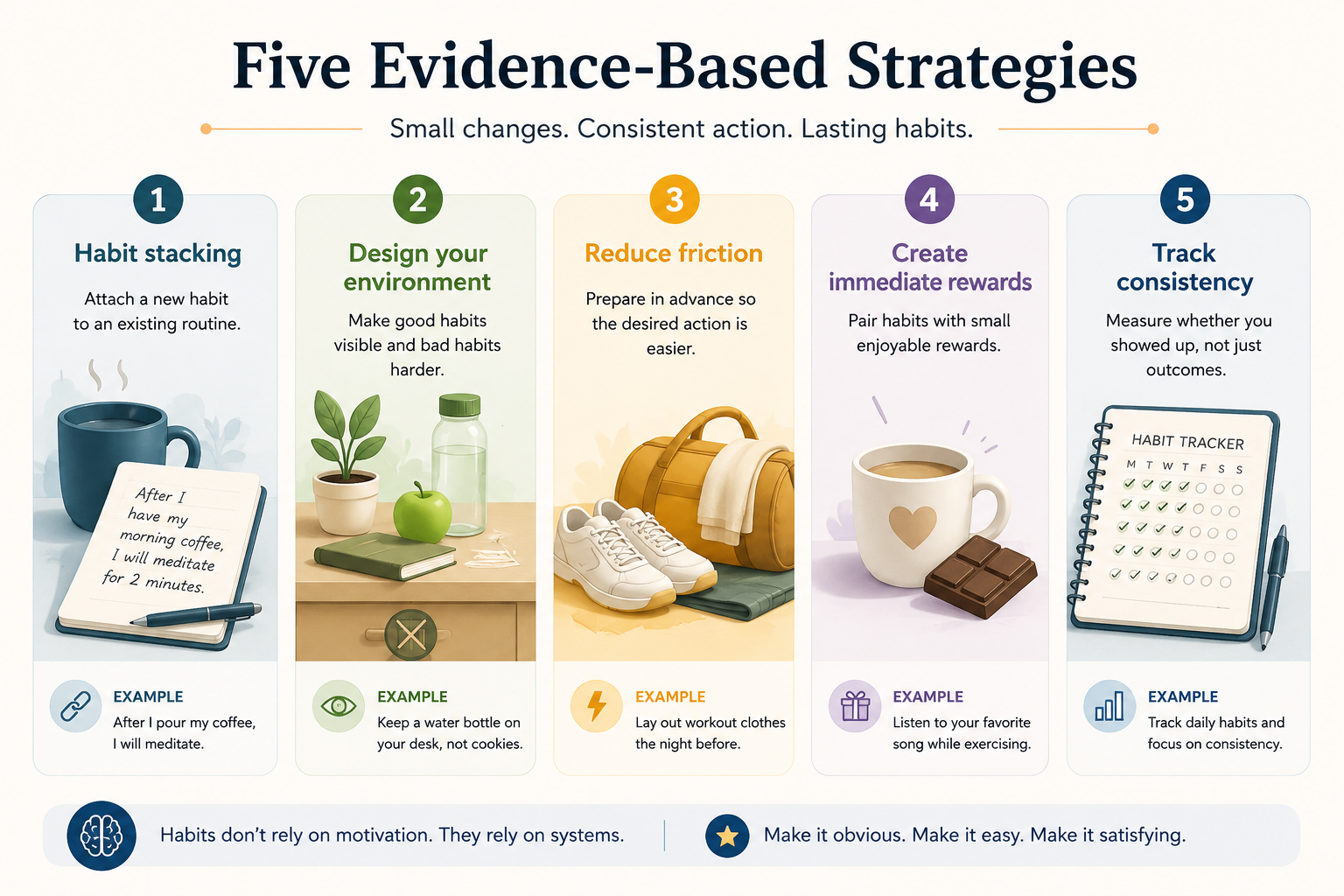
Five Evidence-Based Strategies
Common Habit Mistakes
• Trying to change too many habits at once.
• Relying only on motivation.
• Setting vague goals.
• Ignoring environmental cues.
• Giving up after one missed day.
Rebuilding After a Missed Day
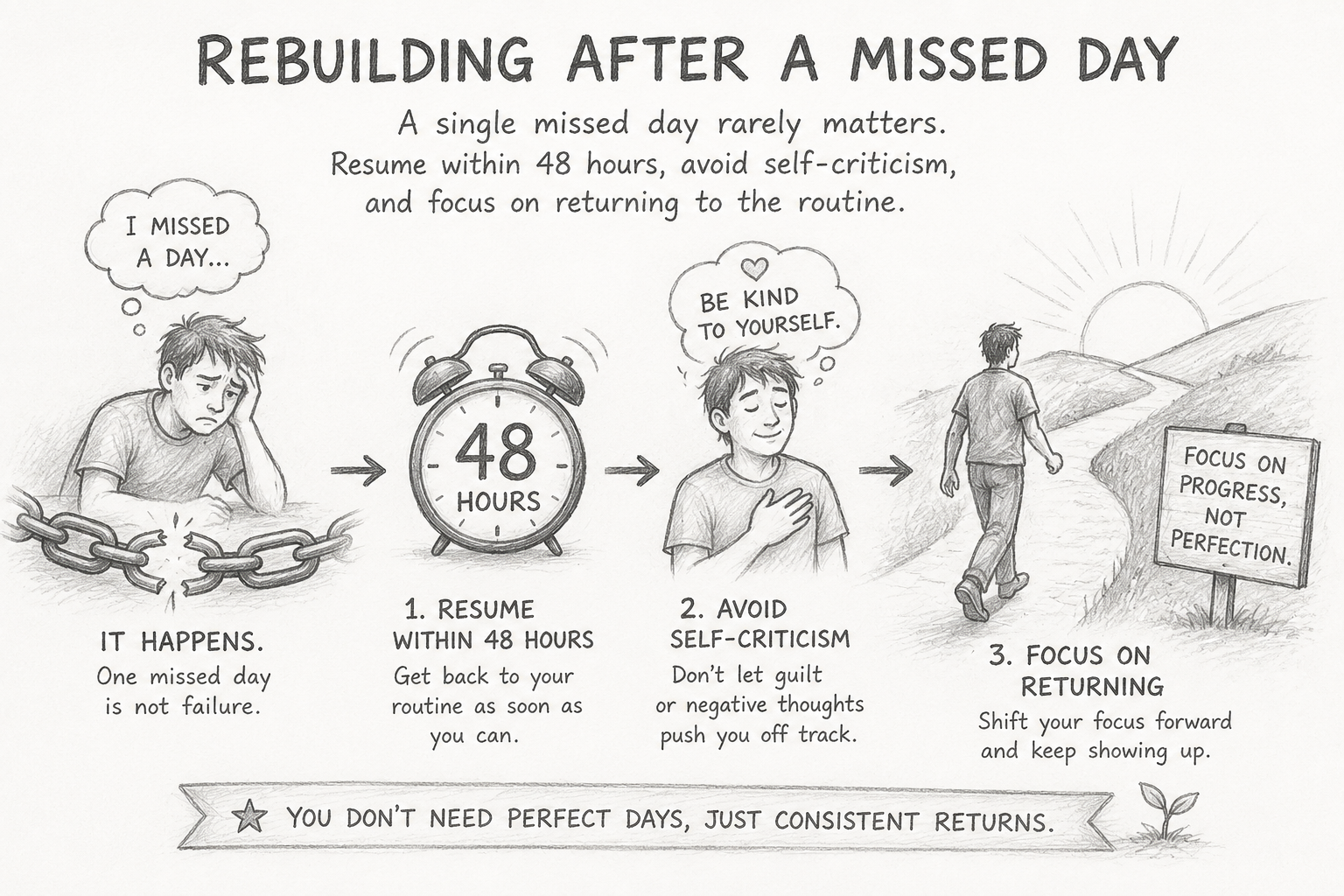
A single missed day rarely matters. Resume within 48 hours, avoid self-criticism, and focus on returning to the routine.
Frequently Asked Questions
• How long does it take?
Around 66 days on average.
• Why do bad habits form faster?
They often provide immediate rewards.
• Can habits disappear?
They weaken when cues and rewards disappear, but old patterns can return.
• Can I build two habits together?
Yes, but starting with one is usually easier.
Conclusion
Long-lasting habits are built through thoughtful design rather than extraordinary discipline. Shape your cues, environment, and rewards, and consistency becomes much easier.
References Books:
- James Clear — Atomic Habits
- Charles Duhigg — The Power of Habit
- Phillippa Lally et al. (2009) — How are habits formed?
- BJ Fogg — Tiny Habits
Enjoyed this?
Get notified when a new Knowlegic story worth knowing is published.


